
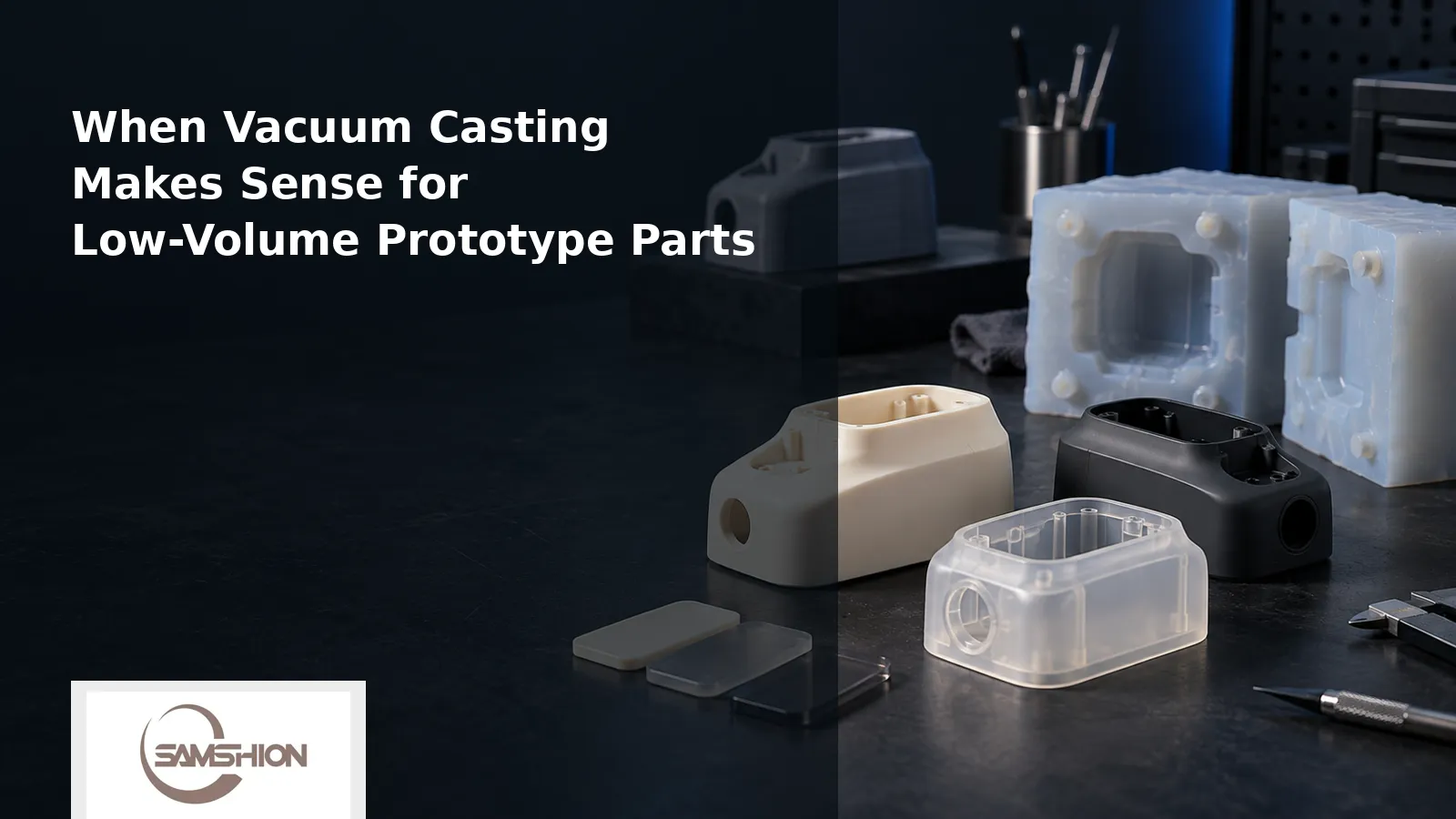
Projects involving appearance expectations, functional sample needs, a master pattern, small-batch quantity, and future production intent need more than a supplier capable of one operation. They need a controlled way to decide what the part must achieve, which file defines the requirement, and how the manufacturing steps remain connected. This is the central challenge in vacuum-casting process selection.
The practical objective is not to prescribe a factory method. It is to give buyers a framework for reviewing choosing a process from a speed claim alone, asking useful questions before release, and comparing quotations against the same approved scope. When requirements are clear, engineering, procurement, and receiving teams can make decisions from evidence rather than assumptions.
Define the evidence the samples must provide
Define the evidence the samples must provide should be treated as a project decision, not an informal note. Start with the released CAD and drawing, then identify the functional interfaces, material or finish conditions, quantity, and acceptance criteria that influence the route. This makes supplier questions more specific.
In practice, the team should check what the prototype must demonstrate before a different route is selected. A small ambiguity can travel into programming, workholding, tooling, inspection, secondary processing, packing, or a repeat order. Resolve the ambiguity before production release, document the agreed outcome, and ask what would need to be revisited if the revision changes.
Understand the master-pattern dependency
Understand the master-pattern dependency should be treated as a project decision, not an informal note. Start with the released CAD and drawing, then identify the functional interfaces, material or finish conditions, quantity, and acceptance criteria that influence the route. This makes supplier questions more specific.
In practice, the team should check what the prototype must demonstrate before a different route is selected. A small ambiguity can travel into programming, workholding, tooling, inspection, secondary processing, packing, or a repeat order. Resolve the ambiguity before production release, document the agreed outcome, and ask what would need to be revisited if the revision changes.
Compare appearance and functional needs
Compare appearance and functional needs should be treated as a project decision, not an informal note. Start with the released CAD and drawing, then identify the functional interfaces, material or finish conditions, quantity, and acceptance criteria that influence the route. This makes supplier questions more specific.
In practice, the team should check what the prototype must demonstrate before a different route is selected. A small ambiguity can travel into programming, workholding, tooling, inspection, secondary processing, packing, or a repeat order. Resolve the ambiguity before production release, document the agreed outcome, and ask what would need to be revisited if the revision changes.
Use quantity as a decision input
Use quantity as a decision input should be treated as a project decision, not an informal note. Start with the released CAD and drawing, then identify the functional interfaces, material or finish conditions, quantity, and acceptance criteria that influence the route. This makes supplier questions more specific.
For a relevant service overview, review vacuum casting services. The current files and approved quotation should still define the project-specific route.
In practice, the team should check what the prototype must demonstrate before a different route is selected. A small ambiguity can travel into programming, workholding, tooling, inspection, secondary processing, packing, or a repeat order. Resolve the ambiguity before production release, document the agreed outcome, and ask what would need to be revisited if the revision changes.
Keep the production comparison realistic
Keep the production comparison realistic should be treated as a project decision, not an informal note. Start with the released CAD and drawing, then identify the functional interfaces, material or finish conditions, quantity, and acceptance criteria that influence the route. This makes supplier questions more specific.
In practice, the team should check what the prototype must demonstrate before a different route is selected. A small ambiguity can travel into programming, workholding, tooling, inspection, secondary processing, packing, or a repeat order. Resolve the ambiguity before production release, document the agreed outcome, and ask what would need to be revisited if the revision changes.
A practical decision table
| Decision area | What to define | Why it matters |
| Define the evidence the samples must provide | Understand the master-pattern dependency | Creates a clearer approved scope |
| Understand the master-pattern dependency | Compare appearance and functional needs | Creates a clearer approved scope |
| Compare appearance and functional needs | Use quantity as a decision input | Creates a clearer approved scope |
| Use quantity as a decision input | Keep the production comparison realistic | Creates a clearer approved scope |
Release checklist
- Confirm the requirements connected to define the evidence the samples must provide.
- Confirm the requirements connected to understand the master-pattern dependency.
- Confirm the requirements connected to compare appearance and functional needs.
- Confirm the requirements connected to use quantity as a decision input.
- Confirm the requirements connected to keep the production comparison realistic.
For broader project and process information, SAMSHION can be reviewed alongside the drawing-specific quotation.
Questions buyers often ask
What should be decided during define the evidence the samples must provide?
The answer depends on the part and risk, but the supplier and buyer should define the controlled revision, scope, responsible approval, and any required inspection or material evidence before the order is released.
When should compare appearance and functional needs be revisited?
The answer depends on the part and risk, but the supplier and buyer should define the controlled revision, scope, responsible approval, and any required inspection or material evidence before the order is released.
What record supports keep the production comparison realistic?
The answer depends on the part and risk, but the supplier and buyer should define the controlled revision, scope, responsible approval, and any required inspection or material evidence before the order is released.
A practical next step
Create a short project checklist for vacuum-casting process selection and use it to align the current design, quotation, inspection, and delivery requirements before release.
